In The Shadows: Casa Pia AC

This is the first instalment in a series of pieces I’ll be doing covering teams that share a hometown with one of football’s elite and thus don’t receive the same level of attention as their noisy neighbours. Everyone deserves their flowers, so it’s time to turn the spotlight onto the team hidden in the shadows.

Part 1: Casa Pia AC, Lisbon

Football in Portugal is a religion, and nowhere is this more apparent than in the capital, Lisboa. The city plays host to two members of Europe’s elite in Sporting CP and Benfica, the latter of which are Portugal’s most successful club. Between them they have won 59 Primeira Liga titles in Portugal, out of only 90 seasons played. They have also combined to win Taça de Portugal, the equivalent of the FA Cup, on 41 occasions. All of this, combined with Benfica’s 2 European Cups in the 60s, makes for a city where football is everything. Two heavily decorated and historic football clubs with a longstanding rivalry dating back to 1907, when 8 Benfica players moved to Sporting before the first game between them took place. The Derby de Lisboa. A city divided.

Even the most devoted football fan may be surprised to learn there are another three top-flight clubs based in the capital, five in the second tier and four in the third tier. This makes Lisbon one of the cities with the most professional football clubs in the world.

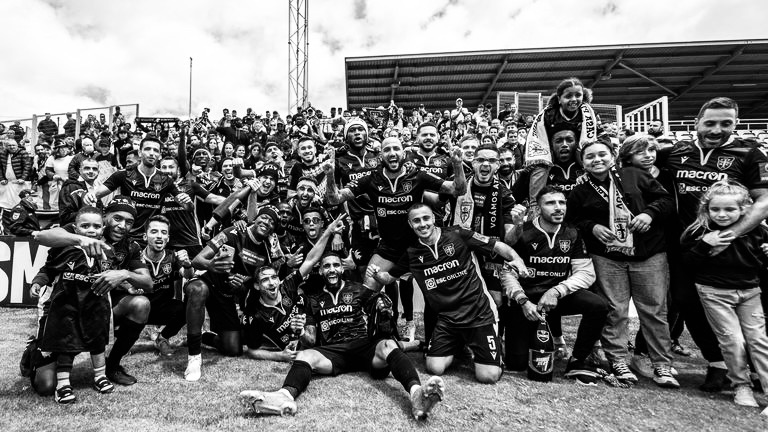
Today I’m going to turn my attention to Casa Pia AC, Os Gansos (The Geese).

Early Days:

Real Casa Pia de Lisboa, formed in 1893, are one of the football clubs credited with cementing association football as commonplace in Portugal. However, the club in its current form of Casa Pia AC wasn’t formed until July of 1920. When Portugal played their first international match against Spain in 1921, they wore Casa Pia kits and were captained Candido de Oliveira, captain of Casa Pia. They are a club whose blood runs deep through the veins of Portuguese football history, a club who were very nearly forgotten and lost to the sands of time.

Casa Pia started off strong, in their debut season they won the 1920 Campeonato de Lisboa (a regional football league) & the Lisbon Cup, defeating Benfica along the way. They also bested FC Porto in a match against the champions of the Campeonato Regional do Porto from the north, which was a curtain raiser for the league season.

At just a few months old, Casa Pia had registered two pieces of silverware, and things were looking positive for Lisboa’s newest team.

They were the first Portuguese team to play in Paris, partaking in an invitational tournament in December of 1920, and also playing in two tournaments in neighbouring Spain the following year. Touring Europe & competing on a par with Sporting and Benfica, just how could things go wrong for Os Gansos?

Things Go Wrong:

Casa Pia played in the inaugural Primeira Liga & Taça de Portugal seasons in 1938/39. There were just eight teams in the league to begin with, Casa won once and lost the other thirteen matches and became the first team relegated from the Primeira Liga. Still making history.

The following year, their stadium was claimed by the fascist government to be used as the site of the Portuguese World Exhibition in Lisbon to spread propaganda. Left homeless, Casa Pia bounced between pitch to pitch, ground sharing with different sides and never staying anywhere too long. Tired of couch-surfing, they eventually settled again in 1954 at Estádio Pina Manique, named after the founder of the Casa Pia orphanage. Home at last.

Now they’d finally settled at a permanent home, it was time to rebuild. A team steeped in rich history like Casa Pia couldn’t stay out of the top flight for too long, could they?

Resurgence:

Casa Pia struggled financially, languishing in the lower tiers of Portuguese football for over half a century. In 2009/10 they won the fourth tier and by 2019 they had made their way up into the second tier, just one promotion away from a Primeira Liga return.

The COVID pandemic hit the club hard, the season paused with them at the foot of the table and on the brink of collapse. They were saved at the expense of others, Aves and Vitória de Setúbal failed to provide documentation to compete in the professional leagues and were both relegated from the Primeira Liga down to the third tier, saving Casa Pia’s status as a second tier side.

It was at this point their true resurgence began.

Just before the 2020/21 season began in the wake of COVID cancelling the previous campaign, Casa Pia AC was taken over by American investor Robert Platek, who appointed Tiago Lopes as his CEO. The situation was bleak.

“We had four players, one employee and twenty days to prepare for the new season” Lopes told Sky Sports.

Despite all this, and against all odds, Casa Pia finished 9th last season and comfortably avoided the drop. Lopes and Platek were looking for a club with a rich history that they could bring into the limelight with modern scouting and recruitment practices, and Casa Pia was the perfect fit. Using data and analytics, Lopes has transformed recruitment at the club, focussing primarily on finding undervalued talents to sell for a big profit. in the same interview with Sky, he outlined his philosophy:

“We use data and want to recruit players at next to no cost. There are 30 slots on the roster and they must generate value. It is like going into a pharmacy. What are you trying to solve? What are the symptoms? What will be the side effects of the medication?”

This approach has clearly worked, having some high profile success stories. Nigerian winger Saviour Godwin was plucked from the second tier in Belgium and sold on for a big profit to the Saudi Pro League. The most notable example of this data-driven recruitment drive is Jota Silva. The now Nottingham Forest winger was signed on a free after being released by a side in Portugal’s third tier. Casa Pia sold him on to Vitoria Guimarães 18 months later for a profit and received a good chunk of cash as a sell on when he made his move to the Premier League last season.

Smart investment and a modern approach to the game bore fruit immediately. After stabilising at 9th in the first season, Casa Pia went on to finish 2nd in 2021/22 and ended an 83 year wait to return to Portuguese top-flight football.

One of the founding fathers of the game in Portugal, relegated in the first ever Primeira Liga season, home at last.

They have continued to invest smartly, finishing 10th, 9th and 9th again in their three seasons back at the top table, the highlight being an emphatic 3-1 win over local rivals Benfica. They continue to invest wisely, even bringing in Ligue 1 and European Championship winner Jose Fonte who, at the age of 41, has played every game for the club so far this season.

Life in the big leagues hasn’t been without its challenges, déjà vu for Casa Pia as the club were kicked out of their stadium upon promotion as it was deemed unfit for the top flight. They spent a year in the old Estádio National before again being pushed out as the FA wanted to host events at the historic stadium. Now they play their home games an hour north of their native Lisbon in Rio Maior, utilising the 7000 capacity stadium of UD Rio Maior after they dissolved in 2010.

By now, they’re used to hardship. The club fashioned the ground into their own, redecorating to make it feel like home and making a real fortress of the place.
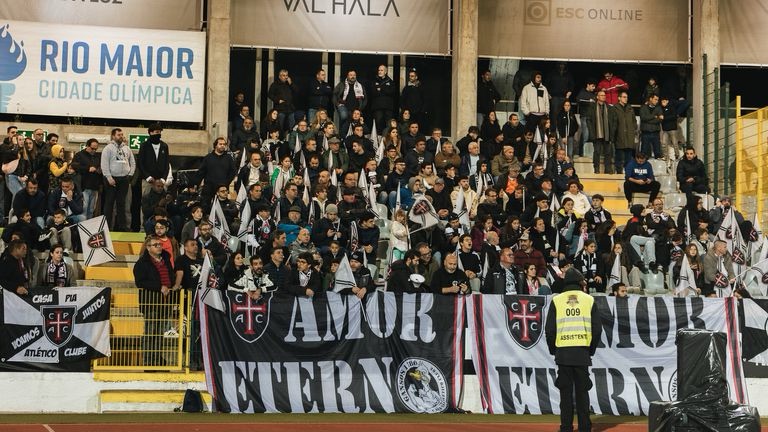
This solution is only temporary, and the hope that Casa Pia can rebuild their own stadium back in the heart of Lisbon is growing. A bumper new TV deal for the Pimeira Liga has only bolstered this hope. Lopes is strong in his beliefs that Casa Pia can become a real force again in Portuguese football:

“I think they all see there is a need for clubs like Casa Pia to come back and refresh the league. With a new stadium, for example, everyone benefits. We could be a sporting and financial landmark in Portuguese football,”

“We see a bright future ahead.”

Source: SkySports

A bright future ahead indeed, if they continue on this trajectory then who knows? I’ll certainly be keeping an eye on their progress. A historical landmark restored to its former glory, and this is just the beginning.

Keep an eye out, you may see the geese flying in formation in European Competition soon enough.

Vamos Os Gansos!
Snitches Get Riches

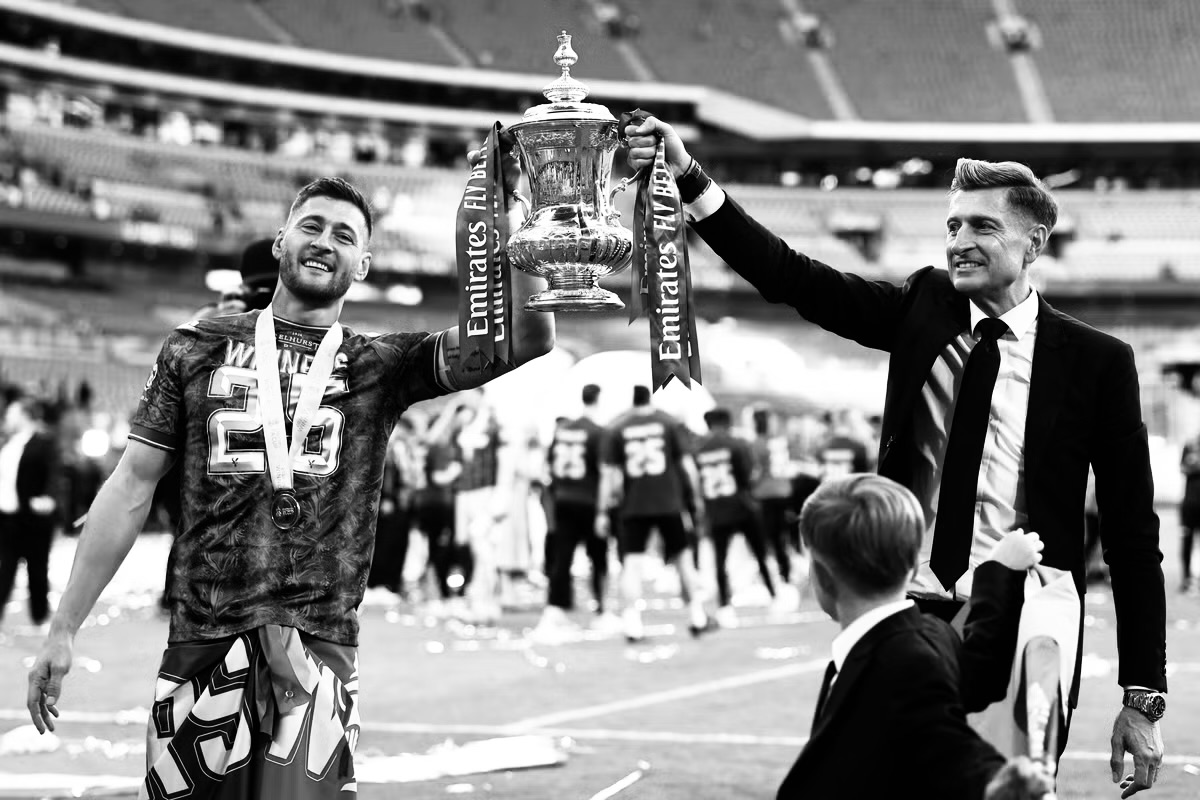
Crystal Palace have flagrantly disregarded the rules and, rightfully, they are now being punished by the long arm of the law. Or so Nottingham Forest would have you believe. They put their hand up and told Mr. UEFA that Steve Parish hadn’t handed in his homework, and in modern football a slight administrative oversight trumps sporting achievement when it comes to European qualification.

So, Forest take Palace’s place in the Europa League while the FA Cup champions are demoted into the Conference League qualifiers. But just how much do Forest have to gain from leapfrogging them this way? And is it fair?

PRIZE MONEY:

I’ll start with the obvious. How much of that sweet UEFA dough is each team set to earn if they perform well in this year’s competitions.

Source: salaryleaks.com

UEFA have allocated €3.317 billion as prize money between the three major competitions. €2.46bn (74.1%) to the Champions League, €565m (17%) to the Europa League and €292m (8.9%) to the Conference League.

Hypothetically, if both teams were to win all eight of their group games and every knockout round all the way to lifting their respective trophies, Nottingham Forest would stand to gain €30.26m in performance related bonuses and Palace would earn €17.57m. A €13m gap makes all the difference in the age of PSR and could be the difference between being forced to sell a key asset or young player to keep in the black vs keeping hold of them or selling a squad player instead.

This isn’t even taking into account TV money, where the real chasm starts to form. Last season’s Conference League champions Chelsea netted a healthy €3.08m in TV revenue from the competition, enough to pay Raheem Sterling’s reported £325k p/w contract for a whole 57 days.

Contrastingly, the team with the lowest TV revenue in the Europa League last season were OGC Nice, who won 0 games, netting €2.86m. The other 35 teams all earned more than Conference League champions Chelsea, even if they only partook in the group stage, with eventual champions Tottenham taking home the biggest share with €19.93m.

Again, every penny counts towards PSR, particularly evident in a summer window that has seen Crystal Palace lose their best player in Eze and only be able to bring in 3 players, all combined for a reported sum €15m less than they received for their talisman. Had they found a suitable replacement on deadline day, this summer would’ve also seen the departure of Palace captain Marc Guehi and, if rumours are to be believed, their manager Glasner would’ve followed suit. Forest, on the other hand, were able to overspend on their incoming transfer fees by €112m, pay off Nuno and hire Ange Postecoglu this summer. Some incentive.

JOHN TEXTOR:

In what I’m sure is a massive coincidence, these summer dealings for Forest include 4 incoming players from Botafogo. On the surface, totally innocent. But Botafogo are owned by John Textor, the very same man who owns Olypique Lyon and holds a minority stake in Palace. Textor’s involvement in Lyon and Palace is the exact conflict of interest that disqualified Palace from the Europa League in the first place. Also interestingly, Lyon were on the verge of being relegated to Ligue 2 and booted from European competition themselves this season before they received the necessary cash injection to meet the French FA’s criteria and remain a Ligue 1 club and retain their Europa League status. Source: ESPN

Forest and Lyon had made a few dealings between each other before this season, with Textor also posting photos of himself at the City Ground recently celebrating the arrivals of his Botafogo players on English shores. He has also shed some more light on his relationship with notorious Forest owner and “friend” Mr Marinakis:


“It’s just a common collaboration with a good friend, who is one of the few European owners extremely active in Brazil,” Textor told Brazilian publication FogaoNET. “The more we know each other, the more we negotiate.”

He added: “Of course, it probably helps that we’re talking about a greater strategic alignment. We’re also looking to keep this traffic moving toward Brazil, not just players leaving Brazil.”

Source: NottinghamshireLive

Ominous to say the least, and their relationship has certainly had some tinfoil hats twitching. Maybe it is a coincidence, or maybe it isn’t, either way I’m sure these two shrewd businessmen have done whatever they have to to make sure they’ve fit themselves through every loophole and dotted every I and crossed every T so nothing could ever come of it.

If only Parish had been so stringent with his paperwork.

ANOTHER TROPHY?:

Oddschecker.com makes Forest fifth favourites to lift the cup at 12/1 and Palace favourites to win theirs at just 5/1. So it isn’t out of the question that both go on to win the respective competitions.

After performances in the competition from Chelsea, and particularly West Ham, it’s clear to see why Palace are so fancied. The financial disparity between the Premier League and the rest of Europe has become so great that any team from England entered into the CL should really be expecting to reach the final at a minimum. Interestingly, favourites for the EL are fellow Premier League side Aston Villa, such is the strength of the division and depth of squads in modern football.

Forest will be up against some tougher opposition, but with last year’s winning manager in charge they could make a deep run into the tournament. In fact, no English team has been eliminated at the group stage of the competition since Everton in 2017/18. And with the group stage format changing to allow 24 of the 36 teams to advance to a knockout, it’s fair to say it would be a huge disappointment if Forest didn’t at least make it that far.

For those cynical about the relevance and necessity of the Conference League, people often point to the joy of West Ham fans as they lifted the trophy in 2023. This was The Hammers’ first trophy since 1965 and obviously an amazing experience for their fans, many of whom had lived entire lifetimes without seeing them lift major silverware.

For Palace, however, this is different.

THE FANS:

Palace fans got their first ever taste of major silverware in the club’s history last season, defeating Manchester City in the FA Cup final and subsequently Liverpool in the Community Shield. It was the greatest day in the club’s history and will be remembered for generations of Palace fans to come.

They don’t care about winning the Conference League, they’ve had their moment in a more prestigious and much more difficult to win competition. The allure of European football is being able to follow your team around the continent and watch them play at some of the most famous arenas in world sport. This was supposed to be their reward for winning the cup. Instead, they’re left in a third-rate competition playing other sides on their maiden voyages into European football. Winnable? Absolutely. Exciting? Not so much.

It will particularly sting when they check the schedules and see who their replacements have drawn in the Europa League group.

Palace Fixtures:

PLAY OFF (H&A): Fredrikstad

HOME: AEK Larnaca, AZ Alkmaar, KuPS

AWAY: Dynamo Kyiv, Strasbourg, Shelbourne

Forest Fixtures:

HOME: FC Midtjylland, FC Porto, Malmo, Ferencvaros

AWAY: Real Betis, Strum Graz, Fc Utrecht, Braga

Away days in France and Ireland are sure to be a good day out, but hardly the far-flung adventures or huge names they would’ve hoped for. Trips to Seville, Graz, Utrecht and Braga will see Forest travel across the breadth of Europe to take in some of the best away days the Europa League has to offer. Not to mention welcoming Champions League regulars Porto, Hungarian giants Ferencvaros and the team Forest bested in the 1979 European cup final, Malmo. Historical significance, big games, amazing away days and all winnable games for Forest. All robbed from the Palace fans.

To add insult to injury, the Dynamo Kyiv fixture is arguably the biggest game Palace have drawn in the groups and will have to be played at a 15,000 capacity ground in Poland due to ongoing geopolitical issues. Their European dream has devolved into a nightmare. The best they can hope for in the knockouts is Fiorentina, maybe Mainz and Sparta Praha, but nothing remotely close to the trips they could’ve had.

Football without fans is nothing.

You’ll see this plastered everywhere. Modern football loves to pretend it’s all about you and I. But a small administrative error has caused Palace fans to be unduly punished by UEFA and have their first ever big European tour stopped before it even began. Football without fans is still a business. Pretending to care is just a part of it.

This all being said, had Parish had his affairs in order we wouldn’t even have to mention it. And who knows, Palace could have their Europa League fairytale next year anyway if they lift this one, or their good form in the league continues.

Match Review: Bromley 2-2 Gillingham

THE GILLS HAVE EYES ON PROMOTION

With Premier League and Championship teams having a weekend off for the international break, the TV cameras turned their attention further down the pyramid. The spotlight this time fell on Gareth Ainsworth’s table-topping Gillingham and their trip to fellow promotion chasers Bromley. The final two unbeaten teams in the fourth tier faced off in Saturday evening’s late kick off in front of just over 3000 fans at Hayes Lane. At stake? A place atop the table for the victors as the cream begins to rise to the top seven games into the new season. Game on.

Those still awake enough to switch the channel over from the England game were treated to a vintage display of League Two football from the very first whistle, neither team required many touches of the ball to bridge the gap between both boxes.

One man who was sure to have his say was Bromley talisman Michael Cheek. The experienced target man was the league’s top scorer last campaign and hasn’t hit below double figures in a season since before Obama was president. With just eight minutes on the clock, Bromley ‘keeper Grant Smith found Cheek on the corner of the box with a long punt forwards. Cheek battled hard and won the flick on, which fell to Nicke Kabamba in the box. His strike partner struck the ball beautifully on the turn using his weaker foot, guiding it past Gillingham’s ‘keeper Glenn Morris just inside the right hand post for his fourth goal of the season despite only starting twice. 1-0 to the home side!

The Bromley faithful had barely had time to catch their breath when, twelve minutes in, that man Cheek nodded in the second. Wide centre-half Idris Odutayo galloped over the halfway line unchallenged and sent a hopeful cross from deep into the Gillingham penalty area, but when you’ve got a number nine like Michael Cheek lurking, hope is sometimes all you need. He leapt highest, diverting the hopeful cross hard and low past the hopeless outstretched reach of Morris. Lead doubled early, and the home faithful were in dreamland.

The hosts will feel they should’ve been three up on the twenty second minute. An excellent ball over the top by Ashley Charles landed at the feet of Kabamba, who brought the ball under control and drove unopposed towards goal. The striker opted to try and dink Morris as the ‘keeper closed in, but he stood tall and saved the shot into the path of an onrushing Michael Cheek. The striker reacted quickly to direct the loose ball towards goal with his head, and had he got it anywhere else on target he would have scored, but his effort was gratefully cleared by covering Gills defender Robbie McKenzie. The lead remained just two goals but Ainsworth’s side were struggling to cope with Bromley.

The away side should’ve had one back before the break. A long ball forward was completely misjudged by Bromley man Omar Sowunmi, leaving Josh Andrews with a clear run at goal. Perhaps surprised to be handed the opportunity, Andrews snatched at the chance, unable to place the ball either side of Smith and left still searching for his first goal of the season to get himself up and running. The whistle rang out for half time, Bromley leading 2-0 and cruising. A lot of work to do for Gareth Ainsworth if his team are to work their way back into this game.

I dread to think what was said in the away dressing room at half time, but whatever it was, it worked a treat. Seven minutes after the restart, Gills captain Armani Little swung in a corner from the left onto the head of Elliot Nevitt. The striker had somehow evaded his marker and was completely free to head the ball at goal, but he will feel he should have done better as Smith parried the attempt well clear and the deficit remained two goals.

Two minutes later, we almost saw a repeat of the second Bromley goal from the away team. Gillingham full-back Max Clark strode into the Bromley half without being pressured and had all the time in the world to launch a cross from deep into the box and onto the head of Andrews. The centre forward does well to get clear of his marker but the contact isn’t as clean as he would’ve liked and the ball drifted wide of the right-hand post. The Gills had opened the half strong, banging away at the Bromley door.

Just three short minutes after Andrews missed that chance, he broke the door down himself. Remeao Hutton hurled a long throw from down by the corner flag and Andrews applied the perfect touch to head the ball well beyond Smith and nestle it into the bottom corner. Finally, Andrews opened his account for the season and the relief was visible on his face as he roared in celebration towards the travelling fans. Questions will have to be asked as to how he was allowed to break free of his marker so easily, Kabamba defended like a true centre-forward and his lapse of concentration was costly. One back, one to go.

Despite the flurry of Gillingham chances, it was the home side who came close to restoring their two goal lead. Once again, Cheek at the heart of all things positive for Bromley. He got fortunate as a clearance from a Gills defender struck him in the chest, but the rest was nearly magical. He brought the ball under control brilliantly, nodding it into his stride and surging towards goal. His left-footed strike from the edge of the box looked destined for the net, Bromley fans jumped off their seats and even Cheek himself began to wheel away in celebration, only to see the shot clatter agonisingly against the post. Inches from 3-1.

They came forward again just a few minutes later, and I needn’t tell you who very nearly had the ball in the back of the Gillingham net. Bromley’s left wing-back Mitchell Pinnock found himself in acres of space out wide and pushed onwards into the box. The summer arrival surveyed his options and opted to shoot, his powerful effort stopped by a strong hand from Morris. The ball was sent spinning towards the edge of the six yard box and within reach of a seemingly omnipresent Michael Cheek, whose volley was blocked brilliantly by the brave head of Clark to keep Gillingham hopes alive.

This Bromley team are brilliant at a number of things. They’re a threat from set-pieces, they’re devastating in transition and they have goals all over the pitch. The one thing they’re best at, however, is drawing football matches. Six of their nine games in all competitions heading into this one had ended in a stalemate, and three of those were from winning positions. You know what happens next.

Deep into stoppage time, the ball is launched forward by Gills stopper Morris. The bounce fools two Bromley defenders and substitute Garath McCleary gambled, bringing the ball down under pressure from the defending Ben Krauhaus. The wiley and well-travelled forward used every drop of his experience on his Gills debut to touch the ball away from the goalkeeper to invite the challenge. He seemed to lose his footing and fell into Grant Smith, resulting in the ‘keeper giving away a last-gasp penalty and taking a knee to the head for his troubles. On a second viewing it looks soft. And it looks criminal on a third. McCleary knows exactly what he’s doing and gives the referee a decision to make. With the ball transitioning between both boxes so quickly, the referee wasn’t close enough to play get to get a clear view and pointed to the spot. Devastation for Bromley and delight for the Gills fans behind the goal. Four long minutes after the penalty was given, Max Clark steps up and dispatches it coolly with a powerful strike straight down the middle.

Full time. 2-2. And breathe!

For a neutral, a fantastic watch. Both teams were a real credit to themselves and the occasion and highlighted the quality that exists in the division without straying too far from the well-loved stereotype of big physical sides duking it out – the shortest of the four starting strikers today was still 6 feet tall. Just the way we like it down here. End-to-end stuff, questionable defending, a bit of handbags at the end and a baffling refereeing decision. Welcome to League Two everyone.

Both sides would’ve probably taken the result had you offered it them pre-match. But Bromley hobble away from the tie scorned while Gills boss Ainsworth was delighted by his teams fight and desire to come back in the second half.

The usually confident and notably unusual Gareth Ainsworth was reserved – by his standards – in his post-match comments, perhaps indicative that even he can’t quite believe they managed to keep that down to just two conceded and they may have been a touch fortunate to get the decision at the end. He was full of praise for Bromley, christening them “the best battlers in the division” and admitting he was excited for the return fixture but is “glad it’s not next week”.

This praise will do little to salve the wounds of Bromley boss Woodman, who was visibly seething in his interview and did not mince his words. On his teams performance, he admitted they “should’ve been out of sight… 4 or 5 up easily” and he isn’t half right, they had enough clear-cut chances to bury Gillingham twice over and failed to capitalise. Talk quickly turned to the decision at the end, Woodman practically spitting. “I’m gutted, I’m fuming… we’ve worked so hard and to get it robbed off us like that… it’s a foul on the keeper.” He’s obviously hurting and you would be, after such a promising display against the side setting the pace in the early stages of this league season a point hardly feels fair. Not to mention they would’ve been sitting pretty in first place had they held on.

Still, 39 games left and lots of positives to take for both teams, who you’d imagine will both be in and around that top seven come May. Plenty of twists and turns to come along the way as always in the Football League. And we wouldn’t have it any other way.

The People vs. Ruben Amorim

The international break is here and with the ringing of that bell so often comes a managerial casualty. With Graham Potter’s position as West Ham boss strengthened by an impressive away win at the City Ground, all eyes are on Sir Jim Ratcliffe’s notoriously itchy trigger finger. Should Manchester United part ways with the manager that was the hottest property in European football this time last year? I’ll present both sides of the argument.

The Prosecution:

Let me cast your mind back to 2020/21. The world was in turmoil, toilet paper was being resold at a premium on Facebook and Manchester United were still rubbish. Over in Portugal, an exciting Sporting side lifted their first Primera Liga title since 2001/02, breaking the seemingly impenetrable streak of Porto & Benfica dominance. Exciting football, innovative tactics and one man at the root of it all.

Ruben Amorim.

The name that echoed across Twitter football experts’ feeds for months as his Sporting side romped to domestic success and recorded famous European victories.

United moved to secure his services midway through last season after parting ways with FA Cup winning disaster Erik Ten Hag, who has coincidentally just lost the Bayer Leverkusen job after just two league games. Amorim took charge of his first league game away at newly promoted Ipswich Town on November 24th 2024, a 1-1 draw.

This game was more than just Amorim’s debut, it was the debut of “The Tactic”. His Sporting side had gained notoriety for the 3-4-3 he deployed, utilising dynamic wing-backs and two attacking midfielders behind the focal point number 9, in Sporting’s case this was Viktor Gyökeres. Journalists and tacticians the world over marvelled at the way his side carved through teams across Portugal and in the Champions League, and the United faithful’s mouths began to water at the prospect that maybe, just maybe, this was the turning point. A new dawn. A return to the top. Back to the good old days. Domestic success. European glory. Finally putting Liverpool & Manchester City back in their rightful place below them in the pecking order.

In 30 league games, Amorim has won 8, drawn 15 and lost 7.

For those of you without calculators, that’s a 26.7% win rate. Worse than Van Gaal, worse than Ten Hag, worse than Moyes.

But why? How has a modern tactician with so much promise been chewed up and spat out so quickly and handily by the Premier League?

Source: FBref

As you can see – the effectiveness of his system did not translate well to football on English soil. Under his leadership, United created two thirds of the xG/90 of his Sporting side, made 2.2 less progressive passes into the penalty area and 2.9 less progressive carries per 90. And, much more importantly, scored much fewer goals, conceded a lot more and picked up 1.54 less points per game. Damning.

The excuse last season was that he hadn’t had any time to spend adapting and moulding the players to his ways, and the players he did have weren’t ones signed by him and didn’t fit the system. Fair enough, now he’s had his full pre season and spent well in excess of £200m, let’s see how they’ve started this season.

Source: FBref

United are having significantly more of the ball (although this is a small sample size having only played 4 games including newly promoted Burnley and a cup tie at Grimsby – which they lost) but still failing to score goals or create any real chances of merit. They’re passing the ball into the penalty area less and carrying it forward at a slightly lower rate too. Yet to keep a clean sheet, this adaptation to holding onto the ball and being more passive in possession hasn’t made them any more solid at the back either.

He’s had time, he has his players and it still isn’t clicking. He’s forced some beloved players out of the club as well and bringing new ones in and yet the outcome remains the same – Manchester United can’t win football matches. It’s not as if the system hasn’t been proven to work in England before, Oli Glasner at Crystal Palace plays in a very similar way and has guided them to a cup win and some very impressive performances along the way with a fraction of the budget.

His total unwillingness to admit the system does not work is concerning, it begs the question – if he playing this way because he thinks it’s the best way to play, or is it just the only way he knows how? Players are being shoehorned into positions that just don’t make sense and good quality players are being left out in the cold. Bruno Fernandes has been one of the most consistent players in the league since he signed for United, scoring goals and contributing all over the pitch, the captain is well regarded as one of the best attacking midfielders in the league. He is being played in holding midfield. To his credit, Bruno has knuckled down as always and has looked like one of the only bright sparks amidst the grey hanging over the club for the last few years now.

Because Fernandes is being deployed deeper, there isn’t room in the team for Kobbie Mainoo. The young, energetic midfielder who started the European Championships final for England as a teenager last summer finds himself on the bench, unable to get into the team ahead of captain Fernandes or more traditional defensive midfielders Casemiro and Ugarte. If you are unable to adapt your system, that clearly isn’t working, to fit in an exciting young prospect like Mainoo then I think it shows his naïveté and failure to recognise what the job at a club like Manchester United entails.

They have a long and rich history of developing and nurturing homegrown talents and with Mainoo out in the cold and a few other notable sales, this tradition is slowly dying at the hands of a man that just can’t admit the ground he’s planted his flag into is slipping away from under him.

One player he has notably clashed with is wonderkid wideman Alejandro Garnacho. A player with a lot of baggage but so much potential – clearly rough around the edges but it doesn’t feel like long until he really comes into his own.

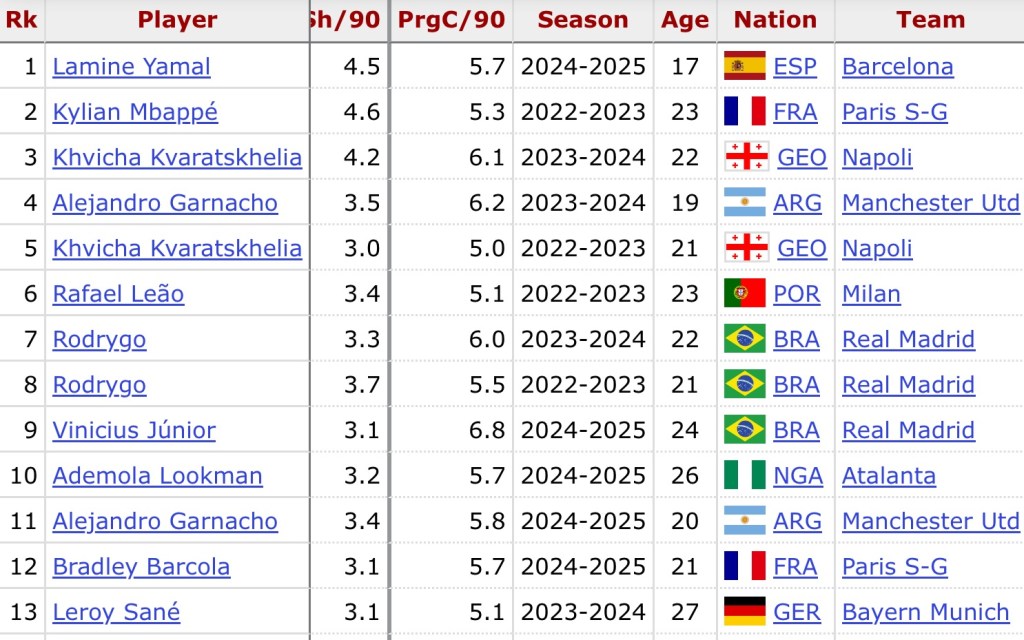
Since 2022/23 there have only been 20 instances where a player has had a season with more than 3 shots per 90 and 5 progressive carries per 90 across Europe’s top 5 leagues (min 1500 mins played).

Alejandro Garnacho is 2 of them.

Source: FBref

I don’t need to tell you that just by looking at the names around him, he is in elite company and a player with an extremely desirable skill set. The fact United have let him go for just £40m looks ridiculous in this context.

However, as with every deal there are caveats to explore and behind-the-scenes happenings we will never fully understand. Rumours of Garnacho being a toxic member of the squad and team news being leaked via him have been swirling for a long while and it’s clear that something untoward involving the young winger was happening.

These facts of the case cannot be ignored and perhaps it was in the best interest of everyone involved to move him on this summer. Even so, United’s – and more specifically Amorim’s – decision to publicly oust him from the squad and declare him no longer part of their plans drained them of any semblance of bargaining power they had left in regards to a fee for his services. This has meant his eventual suitors Chelsea have been allowed to focus on other targets and watch United squirm as the time left in the window dwindled away, approaching them in the final days before the deadline and striking a deal that saw Manchester United sell a 21 year-old academy product with comparable performances in his position to the likes of Kylian Mbappe and Vinicius Junior to a direct rival for less than Chelsea sold Noni Madueke for. Ridiculous.

It’s hard not to think that if Amorim had stayed more cool he may have been able to diffuse the situation – or if it was completely untenable at least keep a poker face in the media and sell Garnacho for £60m+ this summer.

The Rashford situation is similar, an academy player who seemingly had off-field issues impacting his performances and was completely ostracised by Amorim, who seemed one step short of publicly flogging him at times. It’s hard to argue that Rashford’s performances had been up to standard at all in recent years but there’s still a player in there. As recently as 2022/23 he scored THIRTY goals in all competitions for the club – and he has 89 Premier League goals to his name.

Amorim’s hard stance on both these players looks brilliant if it inspires performance levels to be raised across the team and stokes a fire in the bellies of the accused. But it hasn’t. The team, media and fans seem to have unanimously turned against him as poor result after poor result comes washing in.

At the end of the day, football is a results business. If they don’t pick up soon, he’ll be gone, and United will be back at square one.

The Defence:

Ruben Amorim has the hardest job in world football. Manchester United have been a basket case behind the scenes for some time now, with no indication that this is slowing down any time soon. No matter the reality of the situation they are a club that comes with a heavy weight of expectation. Fans demand the performances of Real Madrid even though they have the squad of, well, Manchester United. Mistakes are overanalysed week in, week out that would’ve been ignored if they had happened to the likes of Bournemouth or Brentford.

The pressure and media scrutiny that comes with the role makes me believe that there’s nobody in world football who can stand up to it in the club’s current state. The mismatched squad of players assembled by multiple managers on extortionate wages cannot compete at the level that the Manchester United of old used to, and their contracts are so lucrative that the sell on value for these players is essentially nonexistent.

You have to wonder are they all just bad players and a failure of the recruitment strategy or is there something deeper at United that restricts success at a base level. You only have to look to often-sited horror signing Antony’s loan spell at Real Betis last year that had all their fans singing his name and begging him to make a permanent move. This is a club that kills talent not nurtures it. This is not the Manchester United I grew up loving to hate.

If you change now all the turmoil around the squad in Amorim’s reign is for nothing. You’re left with half a squad signed to play in a way the next manager probably won’t want, unless you can tempt the aforementioned Glasner away from Palace and hope he brings a few of his starlets with him. A change at this stage is an admission of failure and defeat by the Ratcliffe administration, an admission that all the off-field issues and media sensationalism around sackings within the club and extreme budget cutting has been in vain. An admission he will struggle to make.

And so the decision remains in Ratcliffe’s hands. Stick or twist? Believe in the project or scrap it all and start afresh?

Cut your losses and push forward with a new man at the helm, or better the Red Devil you know?

We will see.

Match Review: Crewe 0-3 Swindon

RAILWAYMEN STOPPED IN THEIR TRACKS

It was an afternoon to forget for Lee Bell’s side. Crewe entered the weekend top of the league, scoring goals for fun and staying pretty tidy at the back, but they suffered a heavy defeat at home to The Robins.

Crewe began the game in typically bright fashion, Josh March getting on the end of a great chance that was well saved by Connor Ripley in the Swindon goal. The home side were pegged back early on after some great high pressing from Swindon led to Will Wright winning the ball back on halfway and finding midfielder Gavin Kilkenny, who strode into empty space unchallenged. The away fans urged him to shoot and shoot he did, his effort taking a wicked deflection off of the Crewe skipper Demetriou and flying into the net just inside the far post. 1-0 after 8 minutes.

Crewe nearly got back level as summer signing Reece Hutchinson’s cross-come-shot tested Ripley’s reflexes, but the keeper was equal to it and the ball was palmed over for a corner. An uncharacteristically sloppy second goal followed in the 35th minute, Crewe centre half James Connolly dealing terribly with a bouncing ball over the top and firing a backpass into the chest of ‘keeper Tom Booth. The 21 year old stopper did well to bring it down but couldn’t clear his lines in time to stop an onrushing Paul Glatzel from stealing the ball off of his toes and poking it into the empty net for his first of the season. 2-0 to the visitors.

And things went from bad to worse for the home side just six minutes later. The third Swindon goal was a beauty, some neat interplay and darting runs saw the ball move all the way from the goalkeeper to centre forward Aaron Drinan, who bent the ball superbly beyond Booth’s reach into the top right corner. This goal marked Drinan’s third of the campaign, equalling his tally from last season in just 6 games. While the goal was fantastic, those of a Crewe persuasion will feel it was far too easy to walk through the middle of the team, the Swindon players couldn’t quite believe the space they found themselves in and they took full advantage of the home side’s hospitality.

The game nearly devolved into an all-time horror result for Crewe. Whatever the cause of the lacklustre defending was, it seemed contagious as usually reliable capitan Demetriou played a lazy backpass that Glatzel once again pounced on. His shot trickled harmlessly wide and he should have done much better, a huge let off for Crewe and Demetriou. Some more Barcelona ‘08-esque football from Swindon followed as the visitors played fizzing passes across the park, dragging Crewe all over the place, this culminated in another chance for Drinan and his shot clipped the woodwork and went wide. Another fantastic move by Swindon and the home side gratefully limped in at the interval only three goals down.

The second half played out exactly as you’d expect it to with a visiting side managed Ian Holloway holding a commanding lead. Crewe made two changes at the break, notably bringing on Stoke City loanee Emre Tezgel for more firepower up top. These were met by stoic resilience from Holloway’s side, who continued to threaten the Crewe goal on the counter as they tried desperately, and in vain, to claw a way back into the game.

The better chances of the half fell Swindon’s way, midfielder Darren Oldaker thought he had a penalty early on as he was brought down in the area by substitute James Golding, but the referee deemed that he had gone down too easily and waved play on. It was one of those – fuming if it isn’t given for your team, equally fuming if it’s given against you – ultimately inconsequential amidst the Swindon rout and Goldaker didn’t protest too strongly. Swindon confirmed the signing of reality TV star and EFL veteran Ollie Palmer this week, and the striker made an appearance off the bench. He fashioned himself half a chance but couldn’t quite tuck it away and stayed busy throughout – a solid debut from the former Wrexham man. Crewe’s best chance of the half was a speculative effort that didn’t cause Connor Ripley too much trouble and the full time whistle came, condemning Crewe to a second successive defeat and leaving the two sides level on twelve points in 4th and 5th place after six games.

Fans of The Alex will be hoping the last two games are just a blip after a fantastic start to the season, the ever-changing nature of Crewe’s team combined with the vast inexperience in their ranks can cause inconsistencies – but they have some fantastic young players and a manager in Lee Bell who has already taken them to one Play-Off final and will be hoping to go one further this year. The travelling Swindon faithful, however, will be buoyed by a fantastic away performance and dreaming of a promotion push, and if they can play like that every week it’s hard to see many teams finishing above them this season.

Bell conceded that Swindon were “Better in every department” and knows his side must do better if they’re to steady themselves near the top of the table and compete with some of the division’s financial heavyweights. Holloway was a “very pleased” man and felt his team put in a “complete performance” at The Mornflake Stadium. Few sights the EFL can strike fear into the heart of opposition fans quite like an Ian Holloway side in full flow and he will be hoping to make this season promotion number four to cap off an historic managerial career.

Overall, a day to truly build on as far as Swindon are concerned, and one the Crewe players will be quick to put behind them as both push toward promotion from the fourth tier.